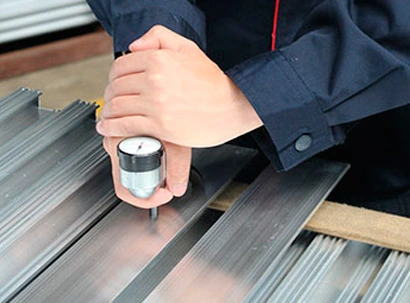
The GRP hardness tester is a kind of indentation hardness tester. It is widely used in the Fiber Reinforced Plastics industry, most of the Fiber Reinforced Plastics products are required to test Barcol hardness.
The structure of the GRP hardness tester is illustrated in Fig.1.

Fig. 1 Structure of the Instrument
The main testing system of the GRP hardness tester is housed within a sturdy frame. The indenter is situated in a full-scale adjusting screw (indenter sleeve), featuring a plunger that is loaded by a spring at the top. The test force applied to the indenter is adjustable via the load adjusting screw, allowing for precise control. As the plunger moves up and down with the indenter, a dial indicator provides a hardness reading through a levering mechanism.
To ensure accuracy, the legs fixed at the back of the frame keep the indenter perpendicular to the test surface. Enclosures on both the left and right sides protect the inner components from damage and potential alterations. Under non-working conditions, the top of the indenter sits 0.76 mm above the full-scale adjusting screw, equivalent to 100 degrees above the top surface. At this point, the indicator aligns with the zero mark, ensuring proper calibration for accurate testing.
The Barcol hardness test for GRP is a crucial method for assessing the hardness and durability of composite materials. With the Barcol hardness tester for GRP, engineers can effectively monitor the quality of their materials during production. The Barcol hardness test for GRP is essential in applications ranging from automotive components to marine structures, where the integrity of the material is vital.

 English